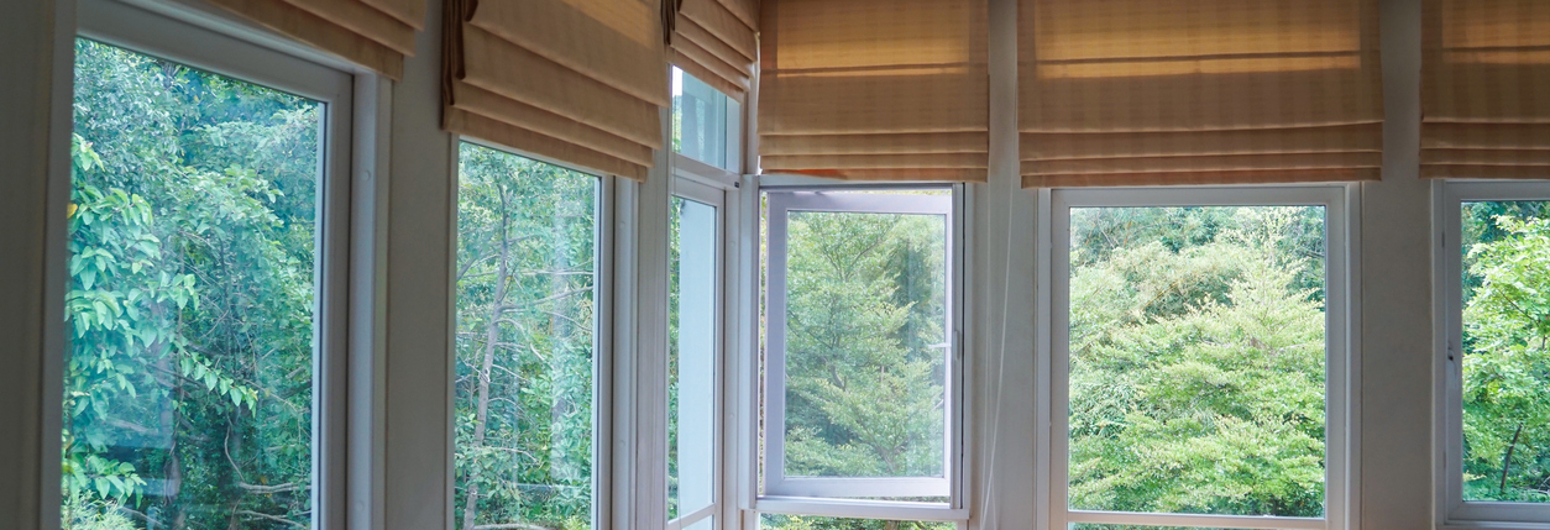
October is Window Covering Safety Month, led by the Window Covering Safety Council, and it's also National Energy Awareness Month. Luckily, some of the most energy-efficient window treatments are also the safest ones to have in a house with kids. At Gotcha Covered we call this a win-win!
On the safety side, the U.S. Consumer Product Safety Commission lists window covering cords among the top five hidden hazards in the home and calls cordless window coverings the safest option when young children are present. Federal rules agree. Custom window coverings made after May 30, 2023 must have no operating cords, inaccessible cords, or cords no longer than 8 inches. With young children in the house, or grandchildren who visit, cordless and motorized shades are the easiest place to start.
On the energy side, the U.S. Department of Energy says heat gain and heat loss through windows are responsible for 25%–30% of residential heating and cooling energy use. Glass is thin, and even a good double-pane window insulates far less than the wall around it. The right window treatment helps make up the difference, in winter and in summer.
Keep reading for options our design consultants often recommend to achieve energy efficiency AND child safety. Cellular shades, solar shades, thermal-lined drapery or Roman shades can all be ordered cordless or motorized.
1. Cellular Shades: Insulation You Can Rate
Cellular shades, also called honeycomb shades, are the first thing we suggest to homeowners who want a warmer room in winter and a cooler room in summer. The fabric is folded into rows of small pockets, and each pocket traps a layer of still air against the glass. Still air resists heat flow. That's the same principle behind the insulation in your walls.
Cellular shades are rated the same way as insulation as well. Wall insulation, attic insulation and window products all carry an R-value, which measures resistance to heat flow. DOE puts it simply: the higher the R-value, the greater the insulating effectiveness. A shade's R-value depends on its fabric and cell construction style. Single-cell shades have one layer of air pockets. Double-cell shades have two, so they generally rate higher, and in colder climates the second cell is often worth the upgrade. Your design consultant can explain how any product you're considering is rated.
The research is encouraging. In a U.S. Department of Energy-funded study at Pacific Northwest National Laboratory, cellular shades reduced heating-season HVAC energy use by 17.6% (±8.1%) in a test home compared with no window coverings. Oak Ridge National Laboratory experiments measured daily heating energy savings of 17%–36%. Your own results will depend on your climate and your windows.
Cellular shades are easy to live with, too. Blackout fabrics keep a bedroom or nursery dark for nap time, or buy parents a few more quiet minutes with their coffee on a weekend morning. Light-filtering fabrics offer privacy while keeping a room bright and cheerful and minimizing glare. Every cellular shade can be ordered cordless, with a simple push-and-pull lift, or motorized and run by remote, app or even voice command.
2. Solar Shades: Controlling Heat, Glare and UV
Solar shades are made for rooms that do not require privacy, but get a lot of sun, like a south-facing living room, a home office with a computer screen, or a sunroom that heats up by mid-afternoon. The woven screen fabric filters sunlight instead of shutting it out, so you keep the daylight and the view. With the right solar shade selection, you can enjoy an afternoon football game without battling glare from the window.
It helps to think of sunlight as three parts. Infrared is the part you feel as heat, and solar shade fabrics are engineered to reflect and absorb a share of it at the window, which lowers heat gain and can reduce cooling costs. In winter you can raise the shade and let the sun help warm the room. Visible light causes glare, and the weave softens it, so screens are easier to read and the view outside stays clear, a little like wearing sunglasses indoors. Ultraviolet light is the part you can't see or feel, and up to 99% of it can be blocked, depending on the fabric.
While the World Health Organization connects UV exposure to health risks like skin cancer, cataracts, and weakened immunity, many people overlook how UV rays also exert a cumulative effect on indoor finishes. If you have ever lifted a rug to reveal faded hardwood beneath or noticed sun-bleached upholstery fabric, you have seen this damage firsthand. Solar shades offer a simple, effective line of defense, keeping your home furnishings looking vibrant far longer by shielding them from harmful rays.
Like cellular shades, solar shades come with a rating that varies by fabric. It's called openness, usually 1%, 3%, 5% or 10%, and it describes how much of the weave is open space. It isn't the percentage of heat blocked. A lower number means a tighter weave, with more sun protection and glare control but a less detailed view. A higher number lets in more light and shows more of the outdoors. Your consultant can help you compare fabrics for each room.
Because the weave is open, solar shades don't offer complete privacy, especially at night. We often layer them with a blackout shade, a cellular shade or drapery, so one window can handle glare during the day, privacy in the evening and darkness for sleep. Solar shades are available cordless or motorized, including with voice control.
3. Interlined and Thermal-Lined Drapery and Roman Shades
If you love the look of fabric on a window, your custom drapery panels and Roman shades can be built with extra layers that give your fabric window treatments a beautiful fullness while also doing a lot of work on a cold window.
A few terms help here. A lining backs the main fabric. An interlining is a separate layer between the face fabric and the lining, and flannel is the classic interlining material. Interlining adds weight and fullness, which is why interlined drapery hangs so well. The extra layers also add insulation and can reduce winter heat loss. The same source describes insulated linings that help regulate temperature by slowing heat loss in winter and blocking sun heat in summer, and blackout linings that stop nearly all outside light.
We can make Roman shades the same way, with a lining and a flannel interlining, so they add body and insulation along with style. A Roman shade folds into soft pleats when raised and lies flat when lowered. Roman shades can hang alone as one beautiful window treatment in a room or layered with drapery or other window treatments.
Fit matters more than most people expect. Drapery works best when it hangs close to the window and wall and is long enough to reach the floor, because the tighter the seal, the better it works. If there's a gap above the rod, a valance can help block heat escaping over the top. This is where a custom order beats a stock panel. Drapery can stand on its own or layered over cellular, solar or Roman shades to maximize features and aesthetics.
Drapery and Roman shades can both be ordered cordless or motorized which makes them easy to operate and a natural choice for nurseries, playrooms and other rooms where child safety is a priority..
4. Motorized Window Treatments for Safety and Energy Savings
Motorized shades have no lift cords, which is why manufacturers describe them as a safer option than shades with exposed cords. The federal standard for custom window coverings notes that cordless systems can be manual or motorized in place of an operating cord.
Motorization can put your windows on a schedule, which is where the energy savings come in. With a system like Hunter Douglas PowerView, you can set times for your shades to open and close from an app, and Hunter Douglas notes that scheduled raising and lowering can keep interiors warmer or cooler, depending on the season. You might raise your shades on a sunny winter morning to let the sun in and lower them at dusk to hold the warmth, or close sun-facing windows before the hottest part of a summer afternoon.
A schedule runs whether you're home or not, so the shades do their job on a workday, during your vacation, or on the weekend day when you forget to close them. Many systems also add sun or light sensors and remote control through an app or smart-home hub. What's available varies by brand and requires a compatible hub or Wi-Fi setup, so our design consultants match the system to your home and your window treatment needs.
Motorization is available across all of the treatments above and makes tall, wide or hard-to-reach windows far easier to manage.
5. Layering and Custom Fit
The most stylish windows we see use two layers. A cellular or solar shade handles light, heat and glare close to the glass, and a drapery panel or Roman shade over it adds softness, privacy and added insulation against the cold. You can utilize each layer depending on the weather, the time of day and who's napping.
A solar shade with drapery gives you glare control and a view by day, and privacy and warmth at night. A cellular shade under drapery puts insulation at the glass with fabric drapes in front for style or additional insulation. Either of those layers can be made with room darkening or blackout linings, which works well in bedrooms. In a nursery or playroom, a motorized shade under stationary panels keeps the window cord-free while the panels do the decorating.
Whichever you choose, fit decides how well it performs. Stock sizes are built to fixed dimensions, so they often leave gaps at the edges or around the frame. Light, heat and cold air slip through. Custom treatments are made to your window instead for the ultimate user experience.
That's where we come in. At Gotcha Covered, our design consultants bring fabric samples to your home, measure each window carefully, and talk through light, privacy, energy and child safety before anything is ordered. Our installers then mount everything so it sits properly and operates smoothly and, if you've chosen motorization, set it up so it's ready to use. That's what we mean by white-glove service.
Start Your Window Project This October
A cordless or motorized shade is a safer choice for the kids in your home. The right fabric can also make the house more comfortable and ease the load on your heating and cooling.
If you're ready to start, schedule a complimentary in-home consultation with your local Gotcha Covered design expert. Make a list of the rooms you would love to address, and we'll take it from there!.