Your bedroom windows do more than frame a view. They control how well you sleep, how hot your room gets in the afternoon, and whether the streetlight outside becomes a 2 a.m. problem.
The right window treatment makes a real difference. The wrong one means years of pulling a pillow over your face or layering mismatched solutions, hoping something works.
This guide covers:
- The best bedroom window treatment options available,
- The problems each one solves, and
- How to match the right treatment to the right room.
Whether you want something simple and minimal or a layered, designer-level setup, there is an option that fits your home and your budget.
Table of Contents
- The Best Window Treatments for Bedrooms
- Best Window Treatments by Bedroom Type
- Solving Specific Bedroom Problems
- How We Can Help You Find the Right Bedroom Blinds
The Best Window Treatments for Bedrooms
Note on imagery: Before committing to any treatment, search image ideas for the option you are considering.
Visit our bedroom window treatment image gallery for inspiration.
Or, searching terms like "blackout roller shade bedroom," "plantation shutters master bedroom," or "layered curtains and cellular shades" in Google Images or Pinterest gives you a realistic picture of how each option looks installed in a real room.
Do this before your consultation so you can point to what resonates.
Blackout Roller Shades
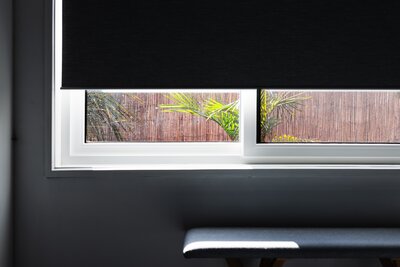
Roller shades are among the most popular bedroom choices for a reason.
They are clean-looking, low-profile, andavailable in true blackout fabric that eliminates light rather than just filtering it.
A quality blackout roller shade blocks direct sunlight, streetlight, and early morning light, with no gaps in the fabric itself.
The only light that gets in comes from the edges of the frame, which is why inside-mount shades in deep window casings or outside-mount shades that extend beyond the frame are the better install choices for maximum darkening.
- Best for: Master bedrooms, shift workers who sleep during the day, nurseries, and anyone who needs a genuinely dark room.
- Also great for: Hot climates. Solar-coated blackout fabrics block radiant heat as well as light, which helps rooms stay cooler without running the AC harder.
- Pair it with: Side panels or drapery for a softer, more finished look alongside functionality.
Cellular (Honeycomb) Shades
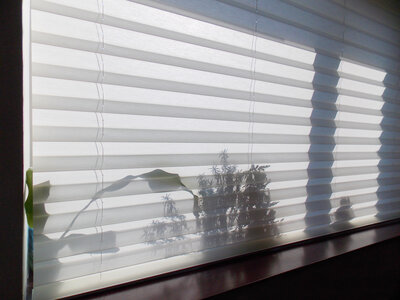
Cellular shades are constructed with a honeycomb cell structure that traps air between the fabric layers.
That trapped air acts as insulation, reducing heat transfer through the window in both summer and winter.
For homeowners in colder climates like the Northeast or Pacific Northwest, double-cell or triple-cell honeycomb shades can meaningfully reduce overnight heat loss through older windows.
In hot climates like the Southwest or Southeast, they help keep radiant heat out during the day.
- Best for: Energy-conscious homeowners, rooms with older or single-pane windows, and anyone looking to reduce heating and cooling costs over time.
- Blackout option available: Blackout cellular shades combine insulation with light blocking, making them a dual-purpose choice for master bedrooms and nurseries.
- Top-down, bottom-up feature: Many cellular shades are available in a top-down, bottom-up configuration. You can lower the top of the shade to let natural light in from above while keeping the lower portion closed for privacy. This is a particularly useful feature for street-facing bedrooms where you want morning light without sacrificing privacy.
Plantation Shutters
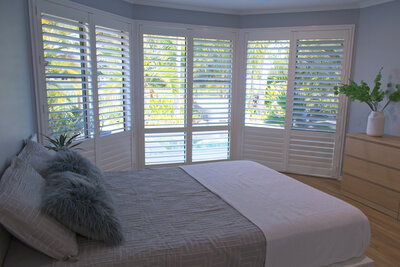
Plantation shutters are the premium option for bedrooms.
Wide, adjustable louvers let you control exactly how much light enters and in which direction. A closed shutter with a center-rail tilt gives you a near-blackout result without requiring any fabric.
Shutters are installed directly on the window frame, becoming a permanent architectural feature of the room. They do not fade, sag, or wear out the way fabric treatments do over time, and they clean with a quick wipe rather than requiring replacement.
- Best for: Master bedrooms, rooms where aesthetics matter as much as function, coastal homes subject to high humidity, and homeowners who want a long-term investment over a short-term fix.
- In hot climates: Shutters are a favorite in states like Florida, Georgia, California, and Texas because they block direct sun and heat while still allowing airflow when the louvers are adjusted. They hold up in high-humidity environments better than most fabric options.
- Light control note: A shutter with a center-tilt rod provides maximum light control. When both panels are fully closed and the louvers tilted shut, the room gets noticeably darker. For true blackout results, pair with a blackout roller shade inside the shutter frame.
Motorized and Smart Shades
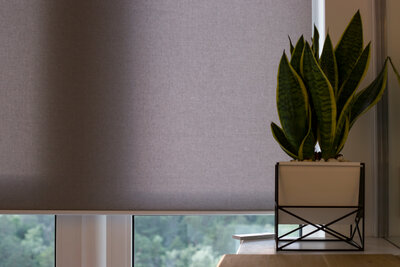
Motorized shades remove the manual operation entirely.
You control them with a remote, a wall switch, a phone app, or a voice command. For high windows, windows above the bed, or skylights, motorized is not a convenience feature. It is the practical choice.
Smart shade systems like Hunter Douglas PowerView allow you to program your shades to open and close on a schedule.
A couple who disagree on wake-up light can set the shades to open gradually after 7 a.m. Blackout shades can be programmed to close at sunset automatically.
- Best for: High or hard-to-reach windows, couples with different light preferences, homeowners with smart home setups, and anyone who wants the convenience of scheduled light control.
- Note on installation: A professional installation that includes programming, remote pairing, and app connection is important. An improperly programmed motorized system is frustrating to use. Have your installer walk you through the app and controls before they leave.
Layered Treatments: Roller Shades or Cellular Shades Plus Drapery
Layering is the most flexible and designer-friendly option for master bedrooms.
A light-filtering or blackout roller shade handles the functional work, and decorative side panels or full drapery panels frame the window and add softness to the room.
The shade goes inside the frame for a clean look. The drapery panels hang outside, typically extending past the window edges and close to the ceiling, which makes the window look taller and the room feel larger.
You can keep the panels open during the day and close just the shade, or close both for full privacy and maximum light blocking at night.
- Best for: Master bedrooms, guest rooms, and any bedroom where you want the room to feel finished and intentional rather than purely utilitarian.
- Allergy note: Homeowners with allergies often prefer roller shades, cellular shades, or shutters to heavy fabric drapery because fabric panels collect dust, pet dander, and other allergens over time. If you are an allergy sufferer, lighter fabrics or hard treatments like shutters are generally easier to maintain. Visit our blog for a deeper look at the best window treatments for allergy sufferers.
Dual Shades (Zebra or Transitional Shades)
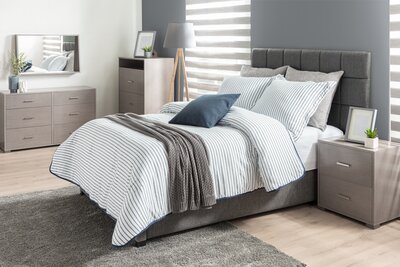
Dual shades alternate between sheer and solid fabric bands.
Rolling the shade adjusts which bands align at the window, giving you a sliding scale from full light to full privacy without changing the shade height.
They offer a modern, minimal look that works well in contemporary bedrooms. The light-filtering position lets in soft, diffused light without glare. The blackout position closes the solid bands together for privacy and light control.
- Best for: Minimalist or modern bedroom aesthetics, guest rooms, and anyone who wants light-control flexibility without operating multiple window coverings at once.
Roman Shades
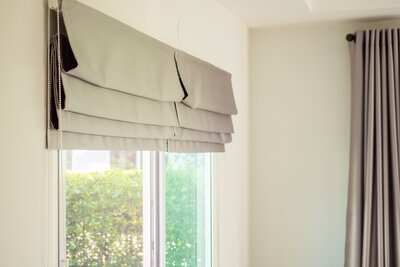
Roman shades fold up in soft, layered panels when raised and lie flat when lowered.
They are available in an enormous range of fabrics,patterns, and textures, making them the most design-flexible option on this list.
Blackout-lined Roman shades work well for bedrooms where aesthetics are a priority. The lining adds weight and body to the fabric, which improves light blocking and gives the shade a more structured, tailored look.
- Best for: Bedrooms that call for a custom, high-end look. Bay windows, accent windows, and rooms are being styled around a specific color palette or pattern.
Best Window Treatments by Bedroom Type
Master Bedroom
The master bedroom usually benefits from the most thoughtful window treatment setup because it serves the most functions:sleeping, dressing, relaxing, and sometimes working from home.
A layered approach works well here. Blackout roller shades orblackout cellular shades inside the frame handle light control.
Drapery panels outside the frame add softness, frame the window, and give the room a finished look.
If the budget allows, motorized blackout shades with app control are a popular upgrade for master bedrooms. Couples with different schedules or light preferences particularly benefit, since each person can adjust the shades independently without waking the other.
Consider: Top-down, bottom-up cellular shades if privacy is a concern on a street-facing window, but you still want morning light from the upper portion.
Nursery and Baby's Room
A dark room is one of the most reliable tools for helping a baby or toddler fall asleep and stay asleep.
Early morning light is one of the most common reasons young children wake before their parents are ready.
True blackout roller shades or blackout cellular shades are the standard recommendation for nurseries. The shade should be mounted as close to the wall as possible and should extend beyond the window frame to minimize light gaps around the edges.
Cordless window treatments are not just a preference in a child's room. It is a safety requirement.
All window treatments in nurseries and children's rooms should be cordless or motorized for their safety. Most major manufacturers offer cordless lift systems as standard on nursery-focused products.
Bonus: Cellular shades also help moderate room temperature, which matters in nurseries where maintaining a consistent, comfortable temperature is part of healthy sleep.
Children's Bedroom
Children's bedrooms have the same light-blocking needs as nurseries, with the added consideration that kids are hard on things.
The treatment needs to be durable and easy to operate.
Cordless blackout roller shades are the most practical choice. They are simple to use, available in fun colors or neutral options, easy to clean, and hold up to daily use.
Cellular shades with cordless lift are another solid option for added insulation.
Avoid long fabric panels or looping cords in any room where young children or pets spend time unsupervised. Safety comes before aesthetics in a child's room.
For older kids and teens: Dual shades offer light-control flexibility without looking juvenile. A neutral or dark roller shade works well if a teenager wants a darker room.
Guest Bedroom
The goal in a guest bedroom is to make every visitor comfortable, regardless of their sleep habits.
A guest who goes to bed early should not be kept awake by the neighbor's security light. A guest who sleeps late should not be woken by the 6 a.m. sun.
Blackout roller shades or cellular shades with a blackout option give your guests control over their environment without requiring explanation.
Keep the operation simple: a cordless lift or a basic manual roller is easy for anyone to figure out without instructions.
Designer note: Guest bedrooms are also good candidates for layered treatments, since they tend to be used for shorter stays and benefit from a hotel-like feel. A crisp white or linen drapery panel alongside a blackout shade creates a clean, welcoming look.
Solving Specific Bedroom Problems
Early Morning Sun and Light Bleed
Standard blinds are not enough for bedrooms that receive direct early morning sun.
Gaps around the frame, gaps between slats, and light-colored fabric all allow more light in than most people expect. True blackout window coverings are the first requirement.
The second is an installation that closes the gap between the shade and the window frame. Outside-mounted shades that extend a few inches beyond the frame on all sides significantly reduce edge light.
Combining blackout shades with a blackout curtain panel is the most effective layered solution for rooms with severe morning light exposure.
Heat, Glare, and High Energy Bills
In hot-climate states like Texas, Florida, Arizona, New Mexico, and California, direct afternoon sun hitting a bedroom window raises the room temperature significantly.
Rooms that face west or southwest are the most affected.
Solar shades andcellular shades with reflective backing are designed to reject radiant heat rather than just block visible light.
Plantation shutters also help because the louvers can deflect direct sun while still allowing airflow when the room needs ventilation.
Combining any of these with proper blackout coverage at night gives you temperature control around the clock.
Cold Rooms and Heating Costs
In colder climates, windows are the weakest point in a room's insulation.
Heat escapes through the glass overnight and in winter, keeping rooms cold even when the thermostat is set properly.
Double-cell or triple-cell honeycomb shades are specifically engineered for this. The air pockets in the cell structure create a thermal barrier between the glass and the room.
Closing them at night reduces overnight heat loss, which lowers heating bills over time. This is a practical, evidence-backed benefit of cellular shades in cold climates, not just marketing language.
Couples with Different Light Preferences
One partner wants complete darkness. The other cannot sleep without some natural light.
This is one of the most common conversations about bedroom window treatments, and there are real solutions.
Motorized shades with app control allow each person to adjust their side of the bed independently, which is especially useful in rooms with multiple windows.
Top-down, bottom-up shades let you bring in a small amount of light from above without fully opening the shade.
For rooms with a single window, a dual shade with adjustable opacity gives you a middle-ground option without requiring two separate products.
Privacy on Street-Facing or Ground-Floor Windows
Street-facing bedroom windows are a particular concern for homeowners on busy roads, ground-floor apartments, or properties where neighbors are close.
You need privacy at night without giving up daylight.
Top-down, bottom-up shades address this directly. Lowering just the top portion brings natural light in from above while keeping the lower half of the window covered at eye level.
Sheer shade layers, layered over a blackout option, provide daytime privacy without a dark room.
Noise Reduction
Window treatments are not a substitute for soundproofing, but heavier fabrics and layered treatments do absorb some ambient noise.
Thick drapes, lined Roman shades, and cellular shades all add some degree of sound dampening compared to bare windows or thin vinyl blinds.
For rooms on busy streets or near highways, combining cellular shades with heavy drapery panels offers the best noise-reduction benefit from a window treatment.
It will not eliminate sound, but it reduces the harshness of ambient noise enough for many people to notice.
Child and Pet Safety
Looped cords on traditional blinds are a documented strangulation hazard for young children and can injure pets.
Most major manufacturers now offer cordless lift and motorized options, and several states have enacted regulations requiring safer designs for new products.
For any bedroom with children or pets, cordless or motorized operation should be non-negotiable.
Cordless shades operate with a simple push-and-pull mechanism. Motorized shades eliminate manual operation entirely. Both are widely available across most product categories at comparable price points to corded alternatives.
Bedroom Refresh and Aesthetics
New window treatments are one of the most impactful changes you can make to a bedroom without a renovation.
Replacing builder-grade vinyl blinds with plantation shutters, a layered shade-and-drapery combination, or even well-fitted roller shades in a quality fabric changes the entire feel of a room.
If you are updating a bedroom, start with how you want the room to feel, then work backward to the treatment plan.
Softer, warmer rooms tend to benefit from fabric layers and Roman shades.
Clean, minimal rooms tend to work best with roller shades or shutters.
Design-heavy rooms with pattern or texture benefit from solid, simple treatments that do not compete with everything else.
Finding the Right Bedroom Window Treatments: Where Gotcha Covered Comes In
Choosing bedroom window treatments is not complicated once someone with real knowledge sits down with you in your home and walks through the options with physical samples in your actual light.
That is exactly how Gotcha Covered works.
A local design consultantcomes to you, brings samples, and spends time understanding how each room is used, what your priorities are, and what fits your budget.
There is no pressure to buy on the spot, no confusing upsells, and no big-box store experience where you are left guessing.
Homeowners consistently describe the process the same way: they came in overwhelmed by options andleft with a clear recommendation they felt confident about.
From first consultation to final installation, the same team handles everything, and they clean up completely when the work is done.
If something arrives and is not right, we make it right. If you want to phase the project by room, they keep your measurements and help you add on when you are ready.
Many of our clients have been long-time clients, coming back room by room or for repairs and upgrades as their needs change.
Schedule Your Free In-Home Consultation
Ready to stop guessing and start sleeping better? Contact your local Gotcha Covered today at (888) 650-6187 to schedule a free in-home consultation. Or, contact your nearest location.
The right bedroom window treatments are out there. The challenge is sorting through hundreds of options without wasting money on something that does not work.
Our local design consultants bring the showroom to you. We listen to what you need, show you options that fit your budget, and handle everything from precise measurement to professional installation and programming.